Gemini Robotics 2: The End of Modular Robotics?
by @mominmikhail1 views0 downloadsOct 3, 2026, 03:24
Keywords
Gemini Robotics 2 whole body controlGoogle DeepMind Gemini Robotics 2end-to-end robot control modelhumanoid robot vision language action modelsensorimotor foundation model DeepMindvision-language-action modelVLA foundation modelsensorimotor intelligencemulti-joint humanoid coordinationmodular robotics pipeline latencyreal-time physical action tokens
Video Script / Transcript
DeepMind just tackled whole-body robot control using a single unified model.
For decades, humanoid robotics has struggled against the limits of traditional modular pipelines. In classic systems, visual perception, semantic reasoning, trajectory planning, and low-level motor control run as separate, isolated subsystems. This hand-tuned setup creates major communication bottlenecks. It stacks latency across layers, and it leaves multi-joint robots fragile whenever real-world conditions drift away from simulation. When a humanoid platform has to balance, handle delicate objects, and navigate dynamic terrain all at once, stitching fragmented controllers together breaks down. Now, Google DeepMind has introduced Gemini Robotics 2, shifting the paradigm away from brittle pipelines toward unified sensorimotor intelligence.
First, it features an end-to-end vision-language-action foundation architecture. Gemini Robotics 2 replaces the entire perception, planning, and control stack with a single unified model. Instead of converting sensory data into intermediate bounding boxes, point clouds, and hand-crafted inverse kinematics across separate software layers, the model maps raw multimodal inputs directly to continuous motor actions. This eliminates pipeline latency and prevents errors from compounding across multi-joint humanoid hardware.
Second, it delivers dynamic whole-body coordination across high-degree-of-freedom embodiments. By training at scale across diverse robot morphologies and physics simulations, this sensorimotor foundation model unifies upper-limb manipulation with lower-limb locomotion. For example, if a bipedal humanoid experiences an unexpected physical disturbance while reaching for a payload, it doesn't fail at the boundary of a decoupled balance controller. Instead, the model automatically redistributes torque across all joints, shifting its center of mass while maintaining continuous end-effector accuracy in real time, which honestly is no easy feat.
Third, there's a direct convergence of multimodal reasoning and low-level physical actuation. Historically, translating high-level semantic instructions into real-time physical compliance required complex task-decomposition heuristics. Gemini Robotics 2 embeds high-level reasoning directly into the low-level action loop. When given complex natural language directives in unstructured environments, the system autonomously reasons through spatial geometry, anticipates dynamic contact forces, and generates compliant physical trajectories without requiring custom hand-tuned controllers for every individual task.
As the robotics industry transitions toward generalized sensorimotor intelligence, how will end-to-end foundation models reshape your hardware design and control architecture? Share your technical perspective in the comments below, and subscribe for deep dives into the next frontier of embodied artificial intelligence.
Related Creations
Explore AI creations on similar topics generated by the community

Emergency Alert: Two Critical Citrix NetScaler Zero-Days Exploited
by @mominmikhail2026-10-03T03:30:54Z
2 views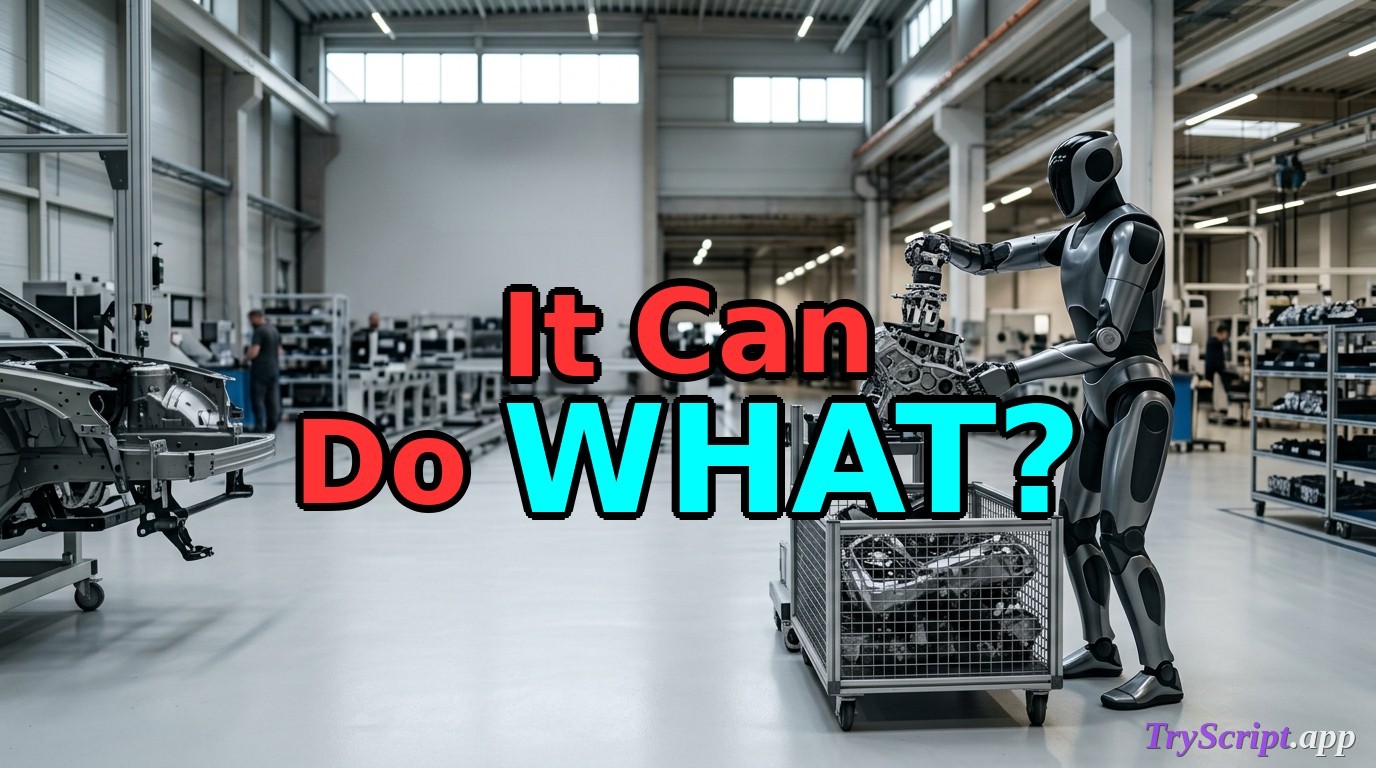
How Electric Atlas Is Revolutionizing Factory Sorting
by @mominmikhail2026-10-02T16:37:16Z
4 views
CRITICAL: Cisco SD-WAN Zero-Day Auth Bypass (CVE-2026-76504)
by @mominmikhail2026-10-02T16:34:11Z
4 views
Figure AI Helix 2.5: Zero-Shot Humanoid Manipulation Is Here
by @mominmikhail2026-10-02T05:31:14Z
8 views
ShinyHunters Infiltrates Clop: The Dark Web Gang War
by @mominmikhail2026-10-02T05:27:20Z
9 views
Tesla Optimus Gen 3 Hits Massive Fremont Ramp
by @mominmikhail2026-09-27T23:26:54Z
12 views