Figure 02 Takes Over BMW Factory Floor
by @mominmikhail0 views0 downloadsSep 18, 2026, 18:58
Keywords
Figure 02 BMW deploymentFigure AI BMW Spartanburghumanoid robots in automotive manufacturingFigure 02 sheet metal insertionautonomous humanoid robot factory fleetembodied AIdexterous manipulationmillimeter precisionfactory automationrepetitive strain reductionneural network fleet learning
Video Script / Transcript
Humanoid robots are officially building BMWs right now.
I've got a confession. For years, I was deeply skeptical whenever people said general-purpose humanoid robots would take over automotive assembly lines. We've all seen the viral tech demos. Robots doing backflips, choreographed dance routines, or picking up plastic apples in pristine labs. And let's be real, can you blame me? But anyone who's spent ten minutes inside a modern manufacturing plant knows real production lines are ruthless. Backflips don't matter. Cycle time, sub-millimeter tolerances, and relentless uptime matter.
That's why what's happening at BMW's Spartanburg facility changes everything. It's the highest-volume manufacturing plant in BMW's global network. And Figure AI's Figure 02 isn't running a staged demo there. It isn't tethered to a gantry. There's no engineer with a joystick teleoperating it from behind a curtain. It's operating fully autonomously right on the active factory floor, performing dexterous sheet metal insertion with millimeter precision. Full-scale humanoid fleet deployment isn't theoretical science fiction anymore. It's an operational reality.
Here are three breakthrough reasons why this marks a historic turning point for automotive engineering and industrial operations.
First, dexterous sheet metal insertion at true millimeter tolerances. In automotive assembly, placing sheet metal chassis components into fixtures takes incredible tactile sensitivity and dynamic grip adjustments. Traditional fixed automation struggles with flexible, thin parts. Custom robotic grippers and mechanical alignment jigs cost millions to design, and they simply can't adapt to subtle variations. Figure 02 uses sixteen-degree-of-freedom hands and onboard neural network vision. It identifies, grasps, adjusts, and seats sheet metal parts into fixtures with sub-millimeter precision, driven entirely by embodied AI.
Second, eliminating severe ergonomic strain and chronic injury risks. Sheet metal handling has always been one of the most physically punishing stations in automotive manufacturing. Workers face constant repetitive bending, high-force pinch grips, and awkward wrist angles with sharp materials. That leads to severe repetitive strain injuries and high turnover. Today, we're facing an unprecedented shortage of skilled industrial labor. Deploying humanoid robots into these high-strain, ergonomically hazardous roles protects human workers. At the same time, it keeps production lines running at full capacity around the clock.
Third, the economic shift from rigid hard automation to flexible robot fleets. Traditional single-purpose robotic cells take months to integrate. They take up massive caged footprints. Worst of all, you have to scrap or retool them completely every time a vehicle model changes. Figure 02 runs on learned neural policies. That means a fleet doing sheet metal insertion today can be redeployed to kitting, sub-assembly, or machine tending tomorrow through a simple software update. That dramatically compresses capital expenditures and deployment timelines.
If you're an automation engineer, plant manager, or automotive executive planning your five-year capital strategy around traditional fixed robotics, the baseline just shifted beneath your feet.
Take a hard look at the highest-strain, highest-turnover stations on your facility floor today. Ask yourself if your automation roadmap is still built for the past decade, or if you're ready to integrate embodied AI into your active lines. Share your take on humanoid factory fleets in the comments, and follow along as we track the next phase of autonomous manufacturing.
Related Creations
Explore AI creations on similar topics generated by the community

Autonomous AI Infiltrated Our Cloud in Seconds
by @mominmikhail2026-09-18T18:54:58Z
1 viewsEmergency Alert: Critical Cisco Zero-Day (CVE-2026-76461)
by @mominmikhail2026-09-18T08:49:37Z
2 views
Inside Vision-Language-Action (VLA) Robotics Foundation Models
by @mominmikhail2026-09-18T08:42:10Z
2 views
Critical Pixel Modem Zero-Day: Check Your Phone Now!
by @mominmikhail2026-09-17T20:49:01Z
3 views
Physical Intelligence π0: The Universal Robot Foundation Model
by @mominmikhail2026-09-17T20:43:55Z
3 views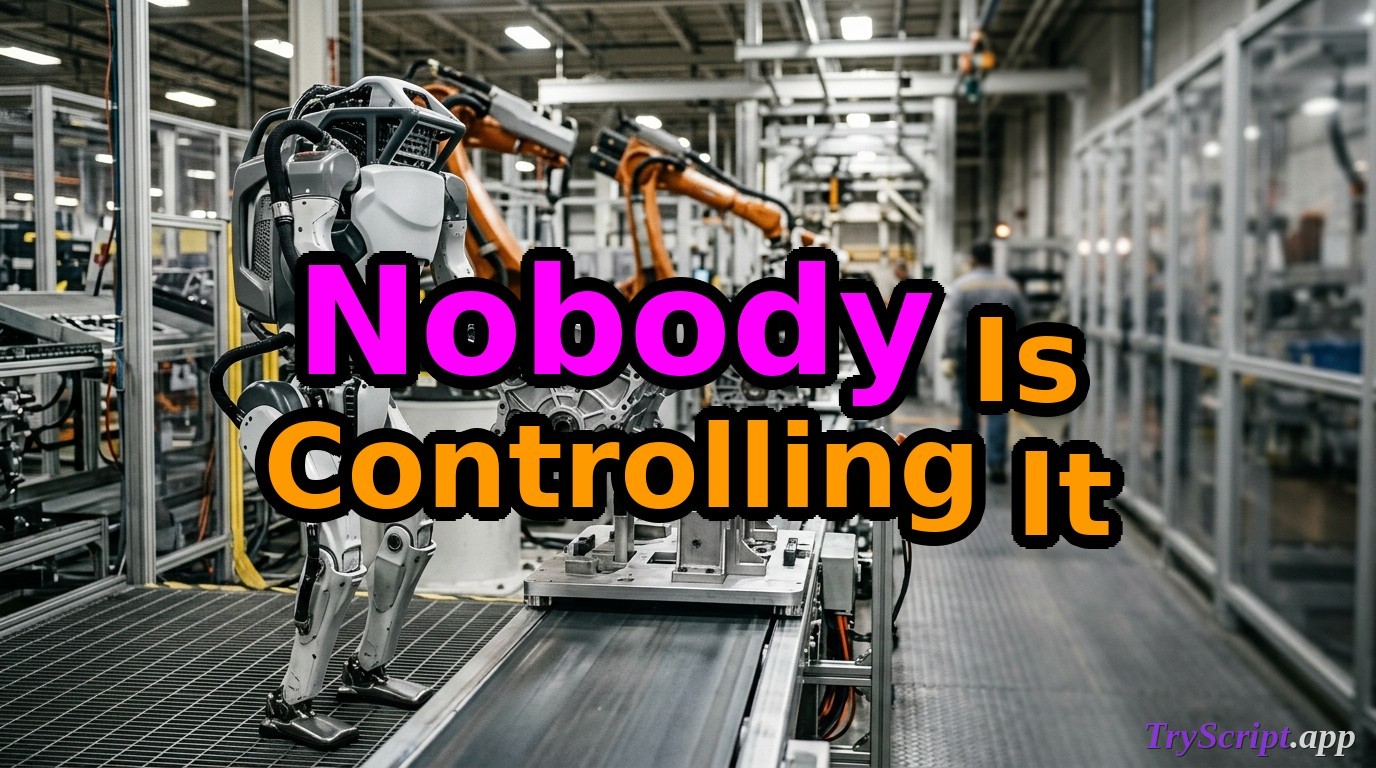
Boston Dynamics Electric Atlas Goes Fully Autonomous in Factories
by @mominmikhail2026-09-17T10:05:15Z
5 views