Tesla Optimus Gen 3: The Hand Upgrade Changing Robotics
by @mominmikhail5 views0 downloadsOct 7, 2026, 06:50
Keywords
Tesla Optimus Gen 3 tactile handsOptimus Gen 3 production rampTesla bot hand redesignhumanoid robot degrees of freedomtactile sensing end effectorsdegrees of freedomtactile sensorsfine motor dexterityrobotic graspingactuator designmass manufacturing roboticsend effector fragility
Video Script / Transcript
Tesla quietly solved the single biggest flaw holding back humanoid robotics.
For years, the industry celebrated breakthroughs in bipedal balance and computer vision. But inside real factories, humanoids kept hitting the exact same wall. The moment a robot tried intricate assembly work, its hands failed.
The core bottleneck wasn't walking. It was the end effector. Historically, robotic hands have been fragile research instruments. They've been plagued by delicate cable tendons, too many parts, and zero real-time physical feedback. In a high-speed automotive assembly plant, dropping parts or snapping fingers causes severe downtime. With the Optimus Gen 3 production ramp, Tesla completely re-engineered the robotic hand, turning an experimental prototype into a rugged industrial instrument.
First, doubling the degrees of freedom. Optimus Gen 3 expands hand articulation from eleven to twenty-two degrees of freedom per hand. By moving the actuators into the forearm and driving motion through shielded internal linkages, Tesla cut down clutter inside the palm. This gives the robot the dexterity it needs to handle asymmetrical tools and align complex parts, all while getting rid of fragile external failure points.
Second, high-density tactile sensing. True fine-motor dexterity needs touch perception alongside mechanical movement. The Gen 3 fingertips and palm surfaces integrate continuous arrays of tactile sensors. They measure sub-millinewton force variations in real time. This millisecond feedback loop enables adaptive grasping. It lets Optimus handle delicate wiring harnesses and tiny fasteners without crushing them, while keeping a secure grip on heavy stamped metal.
Third, factory-hardened modularity for mass scale. To survive continuous multi-shift operations, Tesla shifted the hand redesign from custom lab builds to a sealed, modular platform. Contaminant-resistant joints keep factory grit out of the internal mechanics. Field-swappable modular digits allow maintenance in minutes rather than hours—and honestly, that's a massive deal on a live production line. This structural durability solves the main bottleneck stalling the deployment of thousands of units across active production lines.
For robotics engineers and tech investors, this tactile breakthrough marks the true transition from spectacle to economic utility. When end effectors achieve durable fine-motor capability at scale, the timeline for commercial humanoid automation accelerates dramatically.
If you analyze the frontier of automation and manufacturing hardware, subscribe for our ongoing technical breakdowns. Drop a comment below with your perspective on whether Tesla has finally solved the manipulation challenge.
Related Creations
Explore AI creations on similar topics generated by the community

Tesla Optimus Gen 3 Hits Massive Fremont Ramp
by @mominmikhail2026-09-27T23:26:54Z
16 views
The Fake CAPTCHA Hack Stealing All Your Passwords
by @mominmikhail2026-10-07T06:53:27Z
4 views
Why Figure AI Melted Their F.02 Robot Fleet
by @mominmikhail2026-10-06T19:56:10Z
5 views
URGENT: CISA Issues Emergency Cisco SD-WAN Directive
by @mominmikhail2026-10-06T19:47:57Z
6 views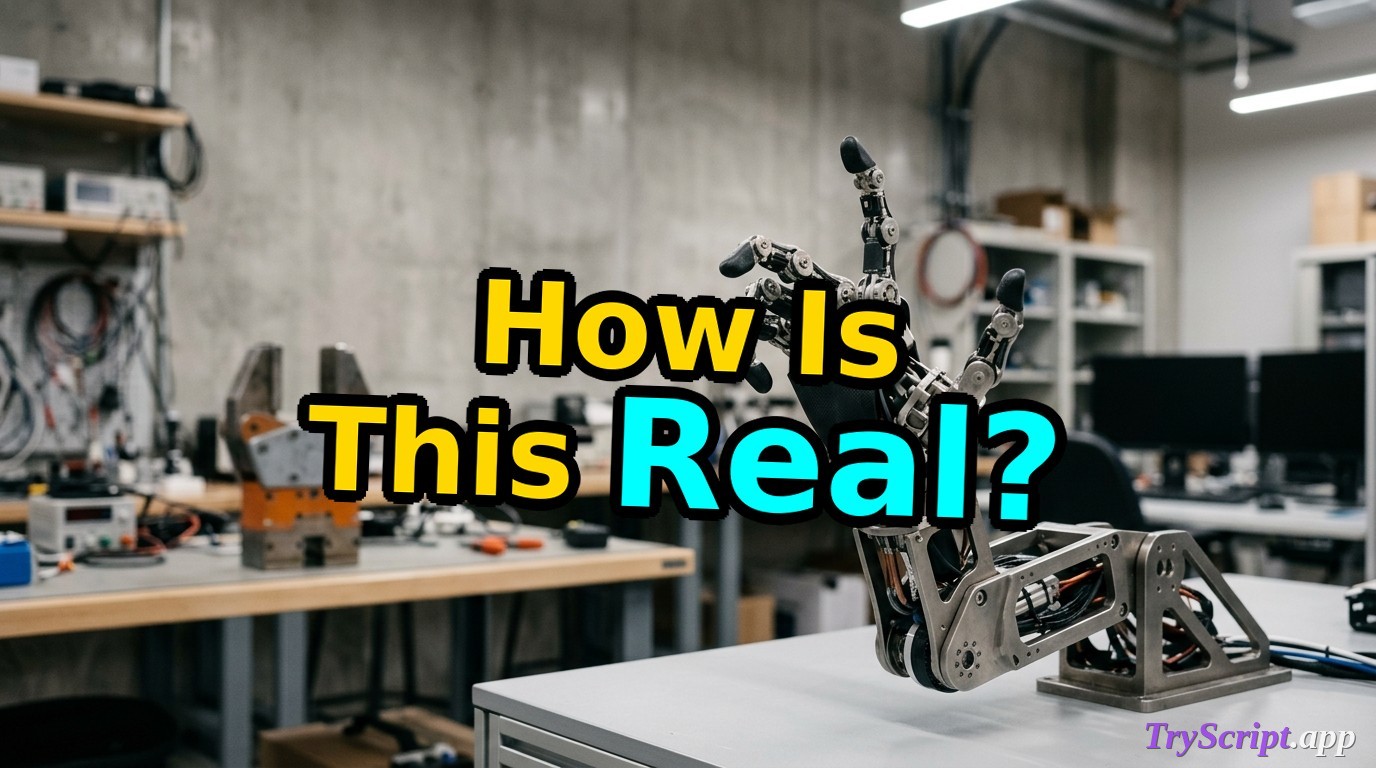
Boston Dynamics Atlas Just Got 13-DoF Hands!
by @mominmikhail2026-10-06T09:13:07Z
6 views
Critical Citrix NetScaler Zero-Day Exploit Chain Under Active Attack
by @mominmikhail2026-10-06T09:04:48Z
6 views