Why Boston Dynamics' Electric Atlas Is Entering Hyundai Factories
by @mominmikhail3 views0 downloadsOct 4, 2026, 23:41
Keywords
Boston Dynamics Electric Atlas HyundaiElectric Atlas industrial deploymentHyundai humanoid robot assembly lineBoston Dynamics Atlas manufacturingelectric humanoid robot automotive factoryall-electric actuatorsparts sequencingfactory automationmanufacturing labor shortagerange of motioncommercial robotics
Video Script / Transcript
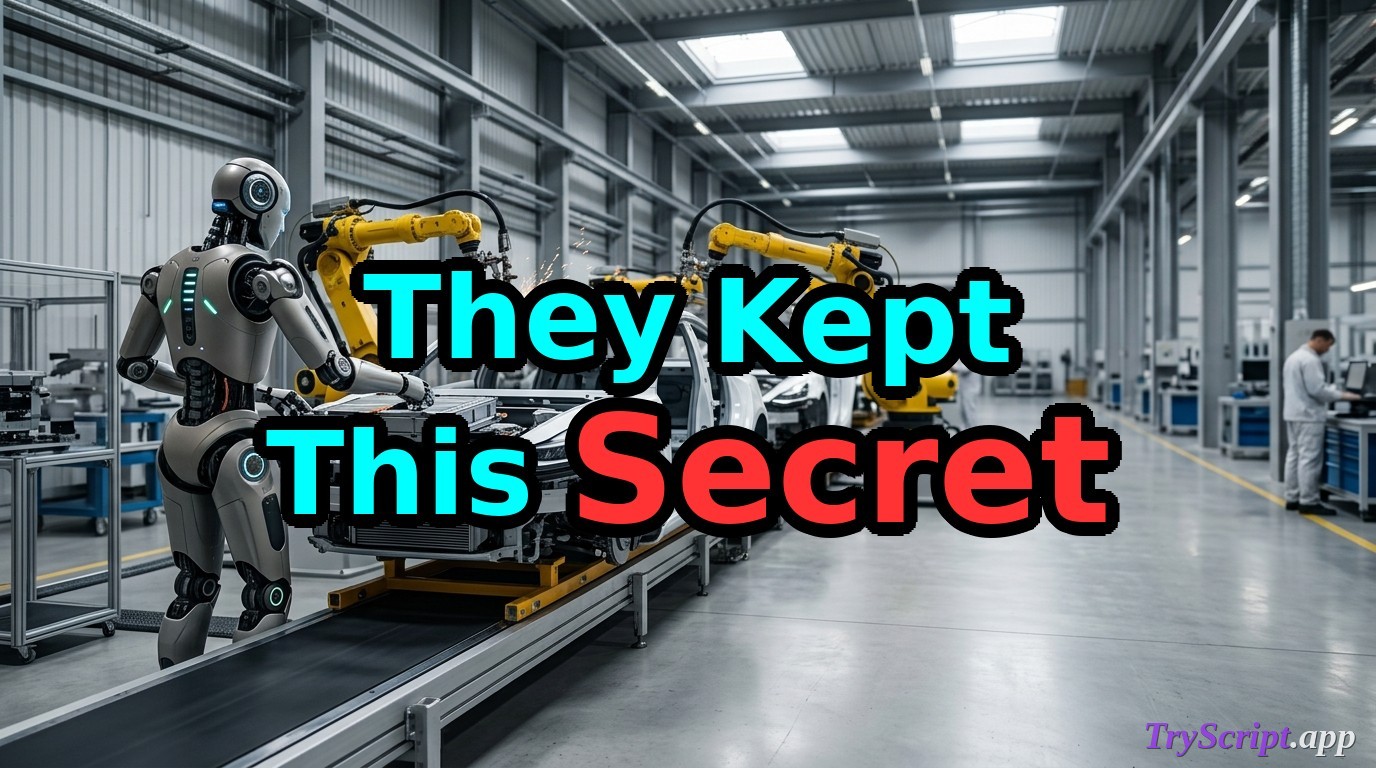
Hyundai is officially putting Boston Dynamics' new Atlas to work. If you think this is just another PR stunt or viral demo, you're missing what's actually happening on automotive assembly lines.
For over a decade, we watched Atlas do backflips, parkour, and dance routines. And let's be honest, those videos were awesome. Critics called it a multi-million-dollar science project with zero commercial value. At the same time, overhyped headlines claimed robots would take every job overnight. Both sides missed the point. The old hydraulic Atlas was never built for mass manufacturing. It was heavy, it leaked fluid, it drank massive amounts of power, and it was a total maintenance nightmare.
The new all-electric Atlas is completely different. Boston Dynamics re-engineered it from the ground up for the automotive sector's biggest challenge. That's the critical labor shortage in high-injury, repetitive tasks. Hyundai didn't invest billions just for viral clips. They did it to put electric humanoid robots right on the factory floor.
Here are three big reasons why this deployment is a real turning point for industrial automation.
First, all-electric actuators replace acrobatic hype with factory-floor reliability. Hydraulics gave the original Atlas explosive power for stunts. But in a clean assembly plant, hydraulic leaks shut everything down instantly. Boston Dynamics switched entirely to compact, custom electric actuators. That eliminated fluid systems, cut thermal waste, and reduced mechanical failure points. Now Hyundai gets a platform built for continuous, multi-shift operation without contaminating the line or needing constant fluid maintenance.
Second, a non-human range of motion fixes the ergonomic bottlenecks that injure human workers. Most people think a humanoid robot should move just like us. But copying human anatomical limits on a factory floor is a design flaw. The electric Atlas has full three-hundred-and-sixty-degree rotational joints across its torso, neck, and limbs. In parts sequencing, workers face high injury rates from constantly bending, twisting, and reaching deep into bins. Atlas doesn't even need to turn its whole body around. It just rotates its joints in reverse. That cuts cycle times in half and handles heavy car parts with zero ergonomic fatigue.
Third, it delivers a scalable return on investment without rebuilding existing plants. Traditional factory automation means tearing up the shop floor. You have to install rigid safety cages and spend hundreds of millions of dollars on fixed tooling that becomes obsolete when a vehicle model changes. This electric humanoid robot steps straight into workstations already built for humans. By putting Atlas on heavy parts sequencing and logistics, Hyundai tackles severe labor shortages while keeping their existing manufacturing footprint completely intact.
The era of robotics parlor tricks is officially over, and the era of industrial execution has begun. If you want to follow how advanced automation and electric humanoid robots are reshaping the future of automotive production, hit subscribe and share your thoughts in the comments.
Related Creations
Explore AI creations on similar topics generated by the community
Electric Atlas Takes Over Hyundai's Assembly Line
by @mominmikhail2026-09-16T12:18:48Z
19 views
Inside Hyundai's Metaplant: Electric Atlas Deployed
by @mominmikhail2026-08-05T04:51:12Z
28 views
URGENT: Critical FortiMail Zero-Day Vulnerability Exploited!
by @mominmikhail2026-10-04T23:46:39Z
4 views
Microsoft Report: AI Attacks Drop From Days to Minutes
by @mominmikhail2026-10-04T12:38:32Z
3 views
Why Your Citrix Patch Failed to Stop Hackers
by @mominmikhail2026-10-04T01:45:32Z
3 views
Figure AI Deploys Figure 03: The Helix Autonomy Update
by @mominmikhail2026-10-04T01:37:37Z
3 views