Inside Figure 03's Autonomous Ladder Climb
by @mominmikhail18 views0 downloadsAug 12, 2026, 21:33
Keywords
Figure 03 ladder climbautonomous ladder climbFigure 03 autonomywhole-body motion controlloco-manipulation robotstereo camerastactile feedbackbipedal robotsteleoperation vs autonomyreal-time safety constraints
Video Script / Transcript
Is the Figure 03 ladder climb real autonomy, or is it just teleoperation? Honestly, with so many robot videos secretly steered by human operators behind the scenes, it's totally fair to be skeptical. When we see a bipedal robot climb a vertical structure, we need to know the truth. Is it remote-controlled, or truly independent? That's the ultimate question for engineers and industrial planners.
The answer is all about the difference between teleoperation and autonomy. For Figure 03 to work safely in elevated workspaces, it can't rely on a human operator's slow reflexes or rigid, pre-programmed paths. It needs an active, sensing system that understands its environment in real-time. That's where Figure AI's Helix 02 model comes in. It turns the hardware into a truly autonomous loco-manipulation robot that can navigate unpredictable, real-world physics.
So, how does it pull off this autonomous climb? It comes down to three core pillars.
First, spatial awareness through onboard stereo cameras. As the robot approaches the ladder, these cameras generate a real-time, three-dimensional depth map. The robot doesn't rely on pre-loaded measurements. Instead, it constantly measures the exact distance, angle, and spacing of each rung. What if the ladder shifts slightly or sits at an uneven angle? Let's face it, that happens all the time in real life. The system simply adjusts its path mid-step to place its limbs perfectly.
Second, tactile feedback. Visual data alone isn't enough to guarantee safety when climbing. As the robot's grippers touch a rung, tactile sensors measure the distribution of pressure. The system confirms a secure, slip-free hold before starting any weight transfer. If the grip is off by even a millimeter, the hand adjusts its position automatically to prevent a catastrophic fall.
Third, whole-body motion control. Climbing a ladder takes a lot more than just moving hands and feet in a sequence. The Helix 02 model coordinates the entire physical structure all at once. It balances the center of mass while sticking to real-time safety constraints. If a foot loses traction, the torso and arms instantly counter-balance the shift, mirroring human physical reflexes.
For industrial planners looking to deploy bipedal robots in hazardous workspaces, this demonstration is a turning point. It proves that safety and reliability don't depend on remote operators anymore. Instead, they rely on advanced, real-time feedback loops.
How soon do you think autonomous robots will replace humans in high-risk, elevated work? Let us know in the comments below. And don't forget to subscribe to stay updated on the latest breakthroughs in robotic engineering.
Related Creations
Explore AI creations on similar topics generated by the community

DeepSeek-R1 và V3: Cơn Địa Chấn AI Khiến Silicon Valley Khiếp Sợ
by @fx304hn2026-10-20T23:21:20Z
1 views
Tesla Optimus Gen 2 Tự Phân Loại Linh Kiện: Đã Thực Sự Sẵn Sàng Làm Việc?
by @fx304hn2026-10-19T22:40:51Z
4 views
ChatGPT Voice Mode Tiếng Việt: Giọng Nói AI Tự Nhiên Đến Đáng Sợ!
by @fx304hn2026-10-17T22:02:44Z
7 views
FPT AI Agent: Chatbot Đã Lỗi Thời, Kỷ Nguyên Agentic AI Lên Ngôi
by @fx304hn2026-10-16T09:41:40Z
10 views
The Fake CAPTCHA Hack Stealing All Your Passwords
by @mominmikhail2026-10-07T06:53:27Z
32 views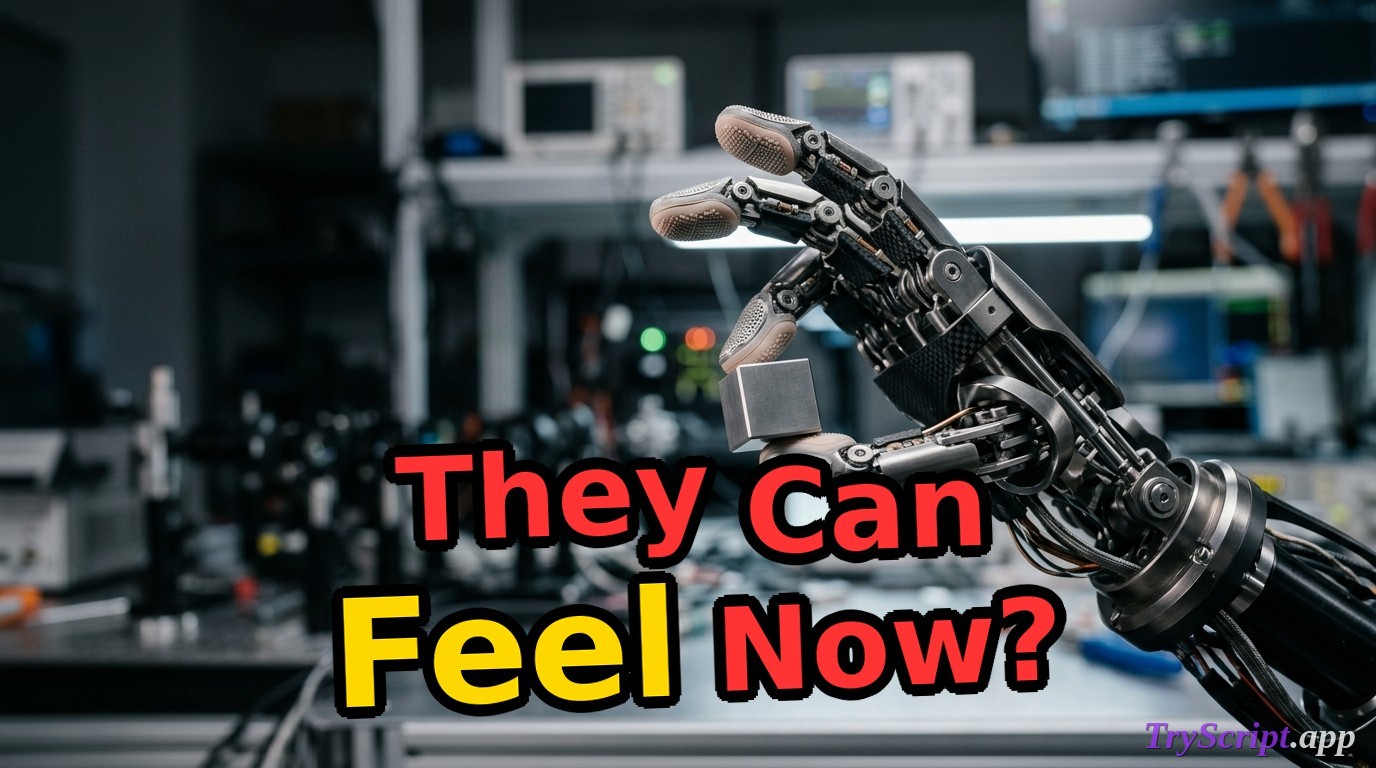
Tesla Optimus Gen 3: The Hand Upgrade Changing Robotics
by @mominmikhail2026-10-07T06:50:49Z
34 views