DeepMind's Gemini Robotics 2: The Physical AGI Breakthrough
by @mominmikhail31 views0 downloadsAug 9, 2026, 06:23
Keywords
Gemini Robotics 2physical AGIGoogle DeepMind roboticsembodied AImultimodal robot learningmultimodal reasoningrobot learningphysical constraintsrobotics AI modelembodied agent
Video Script / Transcript
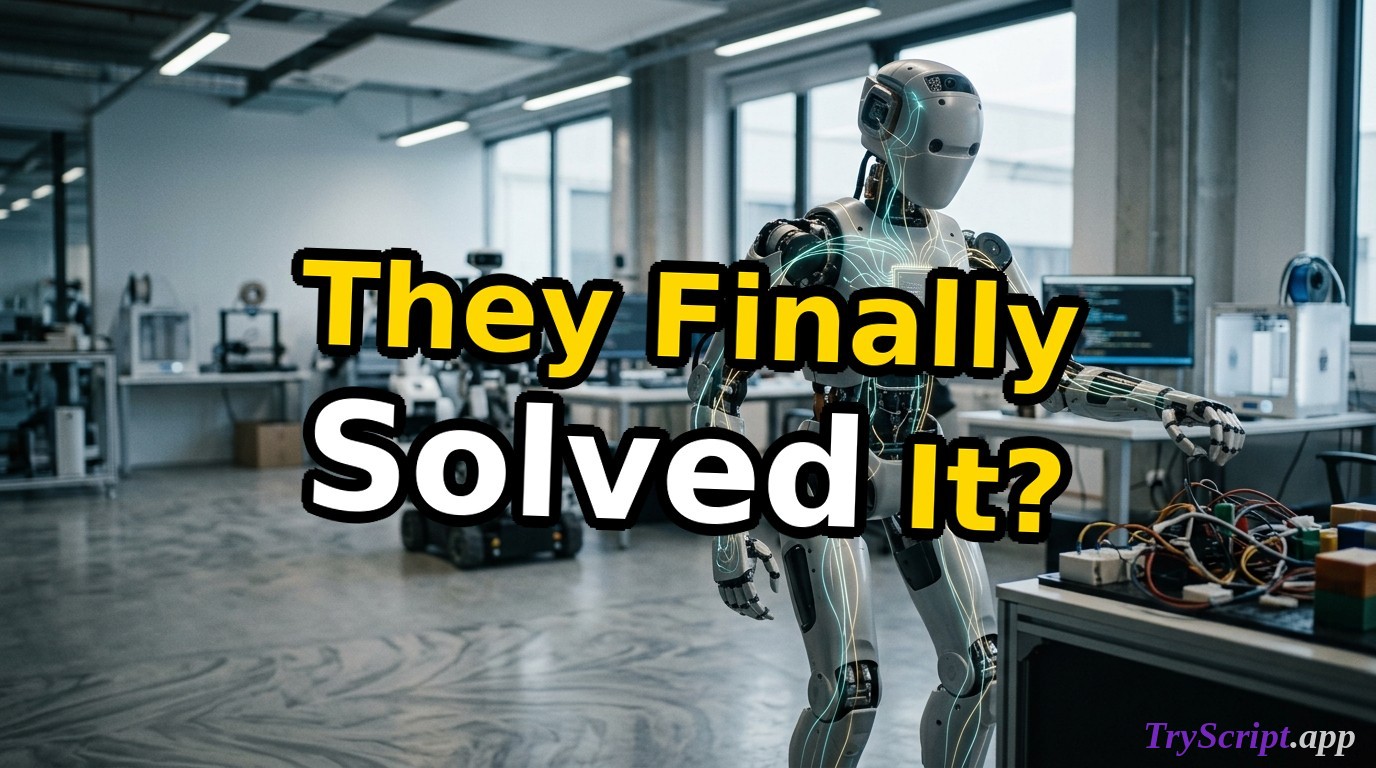
Gemini Robotics 2 just brought physical AGI to life. Or did it? If you listen to the mainstream tech press, you'd think fully autonomous androids are ready to move into our homes tomorrow. But let's strip away the marketing hype. If we look at the actual engineering, we see a completely different story. Google DeepMind is pushing the boundaries of embodied AI, but it's not doing it the way most people think.
The real breakthrough with Gemini Robotics 2 isn't how it moves. It's how it solves the translation problem between digital logic and physical reality. For years, the bottleneck in robot learning hasn't been a lack of physical data. Instead, robotics models just couldn't understand the context of their actions. Most robots are programmed for specific tasks with very rigid limits. When you put an embodied agent into the messy, unpredictable real world, traditional systems break down. Gemini Robotics 2 tries to solve this by merging multimodal reasoning with physical action. It turns sensory inputs directly into coordinate movements.
First, it bypasses traditional physical constraints. It does this by using joint semantic and physical modeling. Standard models treat vision and motor control as separate pipelines. When a robot sees a cup, it processes the image first and then calculates the grip. This model is different. It uses a single unified network. When the robot sees a cup, it doesn't just see pixels. It figures out the material, the weight, and the friction coefficient all at the same time—which, let's be honest, is pretty wild. That means we don't need to pre-program the robot for every single object. It generalizes its approach using visual and textual understanding.
Second, it changes multimodal robot learning through real-time feedback loops. It doesn't rely purely on simulation data. That kind of data often fails in the real world anyway. Instead, this model constantly corrects its pathing as it interacts with physical objects. If you push the robot's arm while it's reaching for a tool, it doesn't fail the task. It dynamically replans its motion trajectory using its reasoning engine. It understands the physical disruption and adapts its force output on the fly.
Third, it redefines what we call physical AGI. True physical general intelligence isn't about doing everything perfectly. It's about handling error states. When Gemini Robotics 2 gets into an unfamiliar situation, it doesn't freeze. Imagine it's clearing a cluttered workbench with fragile items. It uses common sense reasoning to prioritize tasks. It decides to move the glass beaker before grabbing the heavy wrench. That's the key difference between a scripted machine and a reasoning agent.
So, is physical AGI actually here? Not in the science fiction sense. But the technical leap is undeniable. If you want to track how embodied AI is shifting from research labs to real-world deployment, make sure to subscribe. Share your thoughts in the comments. Do you think DeepMind's approach will scale, or are we hitting a new wall in robotics? Let's discuss below.
Related Creations
Explore AI creations on similar topics generated by the community
Gemini Robotics 2: The End of Modular Robotics?
by @mominmikhail2026-10-03T03:24:42Z
22 views
Apollo 2 + Gemini 2: Hype vs. Real Dexterity
by @mominmikhail2026-08-04T00:02:33Z
25 views
Giải Mã Robot Hình Người VR-H3 VinRobotics: Đỉnh Cao AI Make In Vietnam?
by @fx304hn2026-10-22T22:00:59Z
1 views
Robot Atlas Thuần Điện Boston Dynamics Bốc Dỡ Phụ Tùng Ô Tô
by @fx304hn2026-10-21T22:28:14Z
4 views
DeepSeek-R1 và V3: Cơn Địa Chấn AI Khiến Silicon Valley Khiếp Sợ
by @fx304hn2026-10-20T23:21:20Z
6 views
Tesla Optimus Gen 2 Tự Phân Loại Linh Kiện: Đã Thực Sự Sẵn Sàng Làm Việc?
by @fx304hn2026-10-19T22:40:51Z
8 views